
The ROEMHELD Group’s ‘Assembly and Handling’ division offers components and solutions for rotating, lifting, tilting and moving heavy and large workpieces, as well as linear drives. In this interview, Julia Reichert, managing partner, explains how the group is tackling the current challenges.

The business situation is stable – stability is the new ‘great’. The hard work of recent years has paid off. As a result, we are now in such a solid position that we are expanding our portfolio into new areas of application.
We’ve done a great deal of reorganising and restructuring – so that we can now ‘reap the rewards’. This includes stepping up the pace of innovation in assembly and handling technology and optimising our product range. We’ve also reorganised our structure, streamlined processes and accelerated order processing. We’re utilising new sales channels that are suited to the digital age.
With the appointment of Martin Sackmann to the management board in 2025, the generational handover at the top of the company is complete. The team now consists of him, my brother and me. We can clearly sense how positively our initiatives are being received within the company. In doing so, we have set in motion a process that opens up new scope for our employees to take the lead.
Admittedly, sentiment in the industry is rather subdued at the moment and the investment climate is subdued. However, our assembly and handling business generally benefits from the fact that the issue of staff shortages remains a constant concern for many companies. This provides a solid foundation for orders for our products and solutions, which are designed to automate processes, improve ergonomics and ensure quality. In addition, we are stimulating demand by targeting the market much more intensively than before and reaching out to a wider range of customers.
In various ways. On the one hand, we are increasingly winning customers from new sectors. On the other hand, we are seeing a growing trend towards automation in assembly among our existing customers. There are two main groups here: those who wish to speed up assembly and production, and those who are particularly interested in data for quality assurance and documentation.
We have only recently tapped into the market segment of bicycle assembly and repair – our mobile units, Bike proMobil, Bike proStand and Bike basicLift, are selling very well.
Another example comes from the medical sector: here, our mobile lifting columns are now being used to move surgical robots between different treatment rooms. New customers are also emerging from the assembly of components for rail vehicles, the aviation industry and ventilation and air-conditioning technology.
We are currently seeing that the focus is no longer primarily on fighting for every second of productivity. Instead, the emphasis is on solutions that enable companies to empower their staff to work as efficiently as possible. The reasoning behind this is the realisation that it is essential to treat our human capital with care.
Alongside ergonomics, the simplification of processes, time and efficiency savings, as well as quality assurance and occupational safety, are increasingly coming to the fore. These are all requirements where we can capitalise on the advantages of our modular system, built from robust components. This enables customers to configure bespoke solutions that meet their specific requirements for quality and safety.
Positively. We currently still have a small market share in this business area and see significant growth opportunities both in Germany and abroad.
We therefore intend to step up our international growth over the next three to five years. To this end, we are currently adapting our supply chains and our sales organisation. We will also be stepping up our international marketing activities.
The retirement of the baby boomers is leading to a massive loss of labour. Our solutions address precisely this issue: through the intelligent handling of workpieces, they enable safe and efficient working – even in situations where several people were previously required.
Another aspect is that, as a result of demographic change, many companies have already lost internal expertise. We are therefore increasingly offering engineering services in collaboration with specialist engineering firms. This consultancy is a key differentiator for us: whereas we used to be primarily a supplier of high-quality components for assembly and handling, we now increasingly see ourselves as a partner in the search for technical solutions.
There is a willingness to invest, but it is more targeted than before. Discussions are held less frequently, but when they do take place, they are in-depth and we have good prospects of securing an order.
The Covid-19 pandemic has taught us that digital events are only successful to a limited extent. Personal relationships and being close to people are important. Personal rapport is also a factor that should not be underestimated in business.
A very significant one. We now have an innovation team with direct access to senior management. This is a major development and speeds up the innovation process. Previously, staff were integrated into the various engineering departments.
To a certain extent. For example, we carried out a development project with a customer. The aim was to use AI to evaluate the quality of pressing operations on a piece of equipment. This demonstrates the potential for predictive maintenance and process optimisation.
We also use AI to research and analyse our design data, to support sales activities and to assess market potential.
Being too cautious in uncertain times is not a good thing. If you go too long without investing, you enter a downward spiral and lose visibility in the market. In that respect, it is important to invest systematically in sales, product development and staff training. We neglected this for a while in the past, but have made up for it significantly over the last two years.
We try to make the ROEMHELD Group tangible and approachable through events and increased brand awareness. Our young talent development programme, in particular, helps us a great deal. We entrust up-and-coming staff with the responsibility of taking on key tasks. This motivates them and unlocks their potential.
Our products are in demand! Our customers confirm this to us every day. That’s why I’m certain we have a sound business model. We’ve achieved a great deal over the last five years. Since then, we’ve been getting to know each other anew – both amongst ourselves and in our relationships with our customers. These experiences give us fresh energy every day. That’s why I’m confident that our strategy will continue to bring us success in the future.
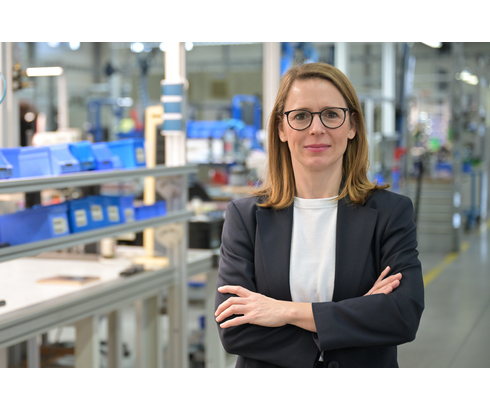
Julia Reichert, née Ehrhardt, is Managing Director of the ROEMHELD Group. After studying economics at Zeppelin University in Friedrichshafen (BA in Economics) and gaining professional experience in other roles, she joined the group’s management team in 2013. She has been managing Römheld GmbH Friedrichshütte since 2014, and two years later she also took on the management of other companies within the group. As a shareholder, she and her brother Philipp Ehrhardt, a mechanical engineer, represent the fifth generation of the owner families in the management of the family business. Julia Reichert is married and has two children.
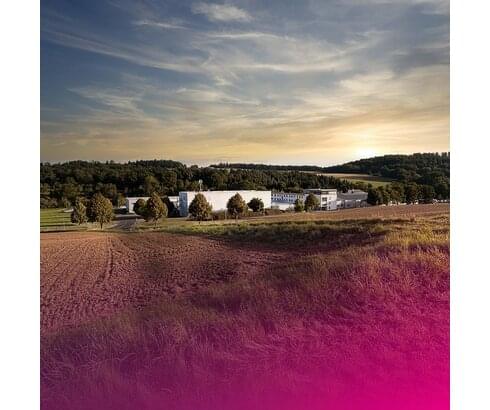
Whether aircraft, cars, machine tools or smartphone casings: ROEMHELD’s technologies and products have been used in the manufacture of numerous industrial goods and consumer products for over 80 years.
Innovative and smart clamping technology solutions for workpieces and dies in metal forming and plastics processing form the core of the continuously expanding portfolio. This is complemented by components and systems for assembly and handling technology, drive technology and automation, as well as locking devices for wind turbine rotors.
In addition to an ever-expanding range of more than 25,000 catalogue items, ROEMHELD specialises in the development and manufacture of bespoke solutions and is internationally recognised as one of the market and quality leaders.
Innovation through tradition: ROEMHELD has its origins in the Friedrichshütte foundry, founded in 1707, which still forms part of the ROEMHELD Group today and is one of the oldest active industrial companies in Germany.
The owner-managed group of companies employs around 500 staff at its three sites in Laubach, Wilnsdorf and Rankweil, Austria, and is represented in over 50 countries through service and sales companies. With customers primarily from the mechanical engineering, automotive, aerospace and agricultural sectors, ROEMHELD generates an annual turnover of more than 80 million euros.
You may also be interested in


Profitez des avantages gratuits de notre zone login:
- Téléchargement de données CAO
- Téléchargement des instructions de service
Bienvenue à nouveau ! Connectez-vous à votre compte d’utilisateur déjà existant.